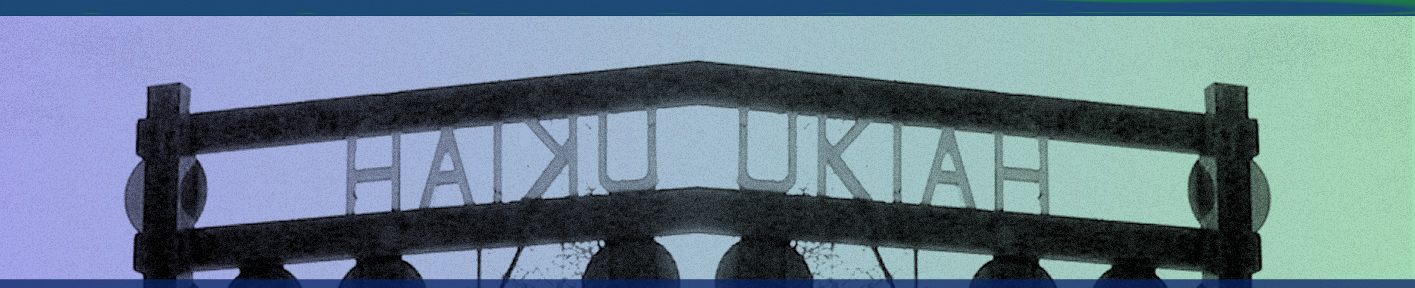
THE ANNUAL A celebration and competition devoted to the haiku form of poetry |
|
Awards will be presented in the following ten categories: General Topics (Regional*) *Regional categories are open to residents of Mendocino, Humboldt, Lake, and Sonoma Counties in northern California. Submissions to regional categories are free of charge. Winners in the regional categories receive a certificate, publication in a booklet of winning haiku, and a copy of the booklet. **The Benj Thomas Prize honors the memory of Benj Thomas, former Ukiah City Mayor, who brought poetry, including haiku, to so many young people. ***The Dori Anderson Prize honors the memory of Dori Anderson, former head librarian of the Ukiah Branch Library, who originally suggested the idea of the ukiaHaiku festival. Dori served, with wit and wisdom, on the Poet Laureate Committee for many years. ****The Jane Reichhold International Prize honors the memory of internationally renowned haiku poet and Mendocino County resident Jane Reichhold, author of Writing & Enjoying Haiku and other books. Jane was a ukiaHaiku judge since the early years of the festival and made a tremendous contribution to the festival in an advisory capacity. The Jane Reichhold International Prize Category is open to submissions from the entire planet. Winners in the Jane Reichhold International Prize Category receive monetary awards: $100 first place, $50 second place, $25 third place, plus a certificate, publication in a booklet of winning haiku, and a copy of the booklet. For a definition of haiku and examples on which judging criteria are based, please see our Resources page. ukiahaiku Submission GuidelinesPlease read these guidelines carefully. Submissions that do not follow these guidelines will be disqualified. Please note that we have a regional focus for all categories except one, the Jane Reichhold International Prize, which is open to adults planet-wide. All other categories are open to residents of Mendocino, Humboldt, Lake, and Sonoma counties in northern California.
For more information about how to write a haiku and what our judges are looking for in a haiku, please see our resources link below. Read winning haiku of
past festivals News: We are thankful to Michael Dylan Welch, passionate haiku advocate and author, for judging the Jane Reichhold International category since Reichhold's death in 2016.
|
Home | Festival Information | Submission Guidelines | Contact & Credits | Resources |